Sculpture
Kaleidoscopes
Handmade and commissioned kaleidoscopes exploring mirrored geometry, optics, and immersive reflected light.
Haeckel Kaleidoscope (2015)
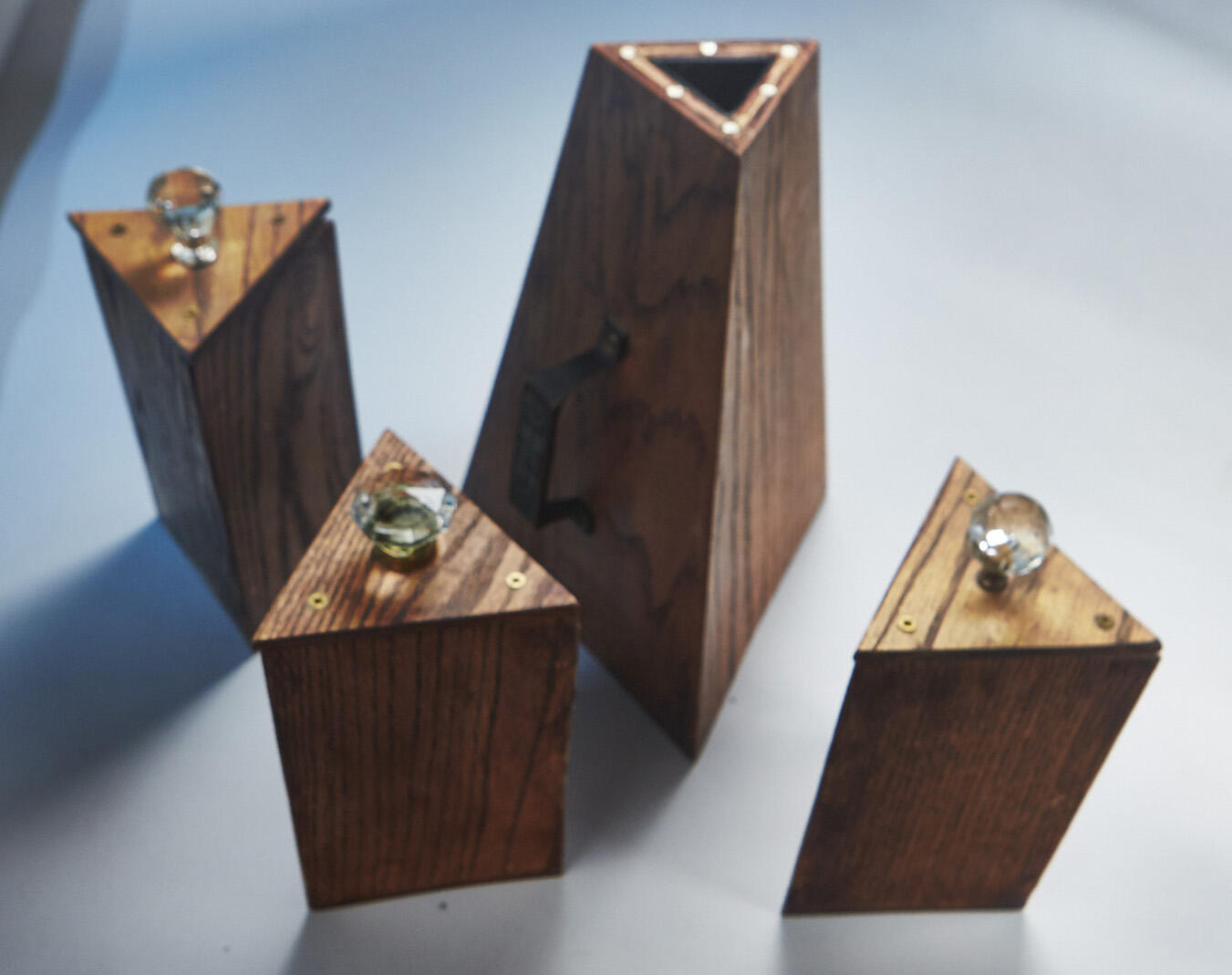
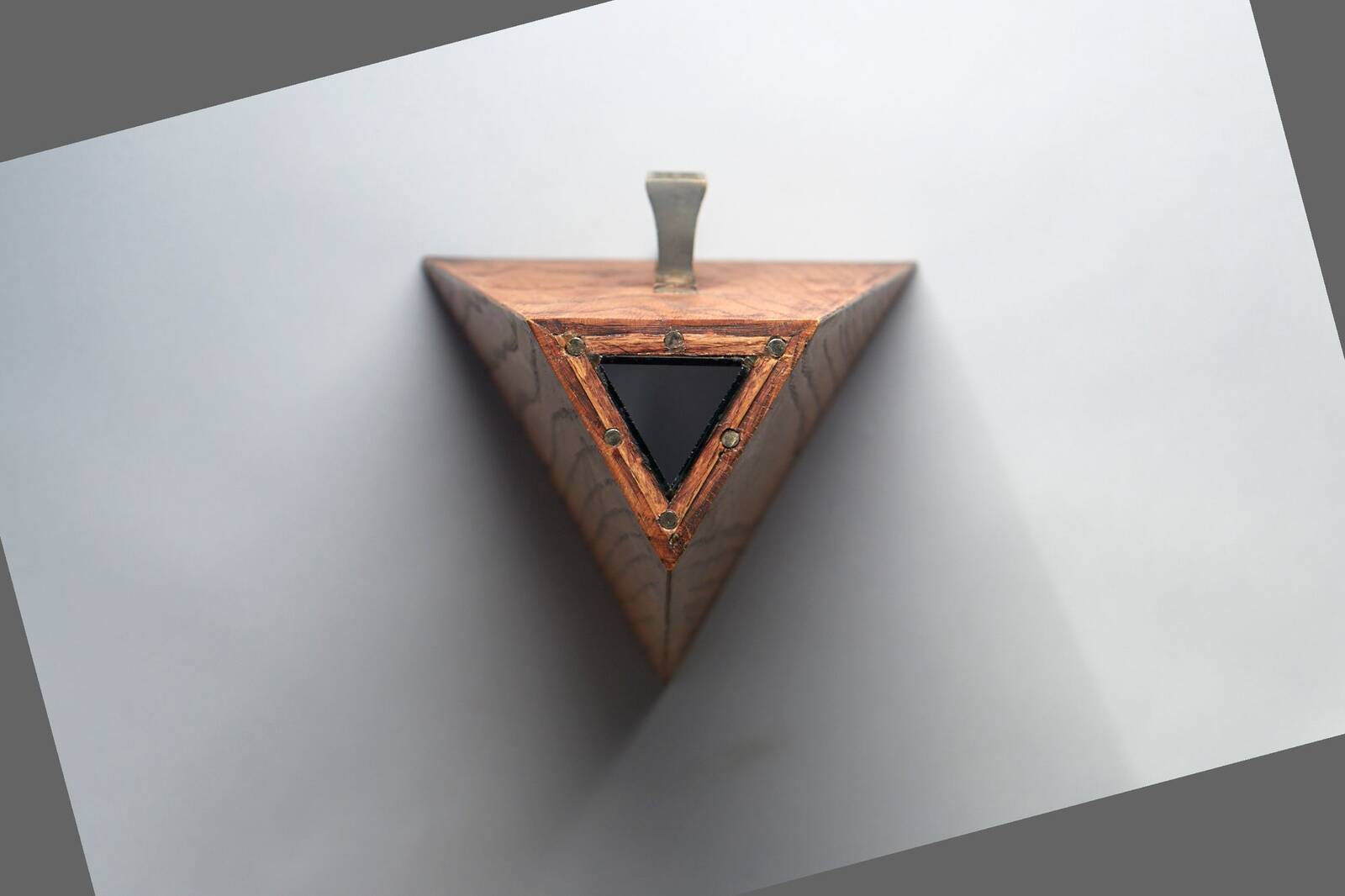
A handmade wooden kaleidoscope built around a triangular mirror arrangement. Named for Ernst Haeckel, the 19th-century biologist who catalogued the geometric forms of microscopic organisms — radiolaria, diatoms, jellyfish — and revealed that nature's deepest structures are kaleidoscopic.
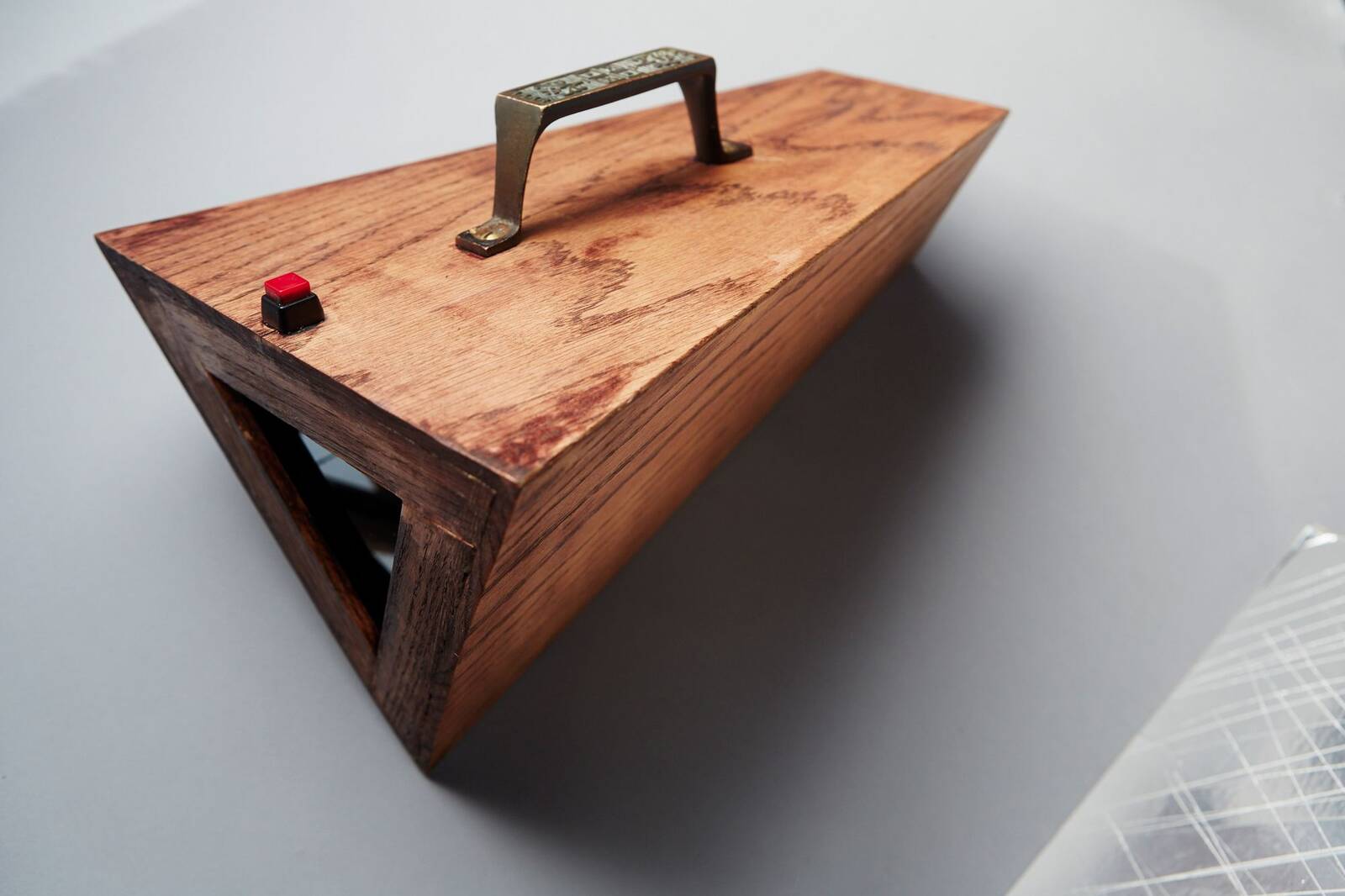
The scope is housed in an oak case with a brass handle. Looking through the triangular viewport, objects and light sources explode into crystalline symmetries. The effect is immediate and physical — your brain can't help but try to parse the pattern, even knowing it's generated by three flat mirrors.
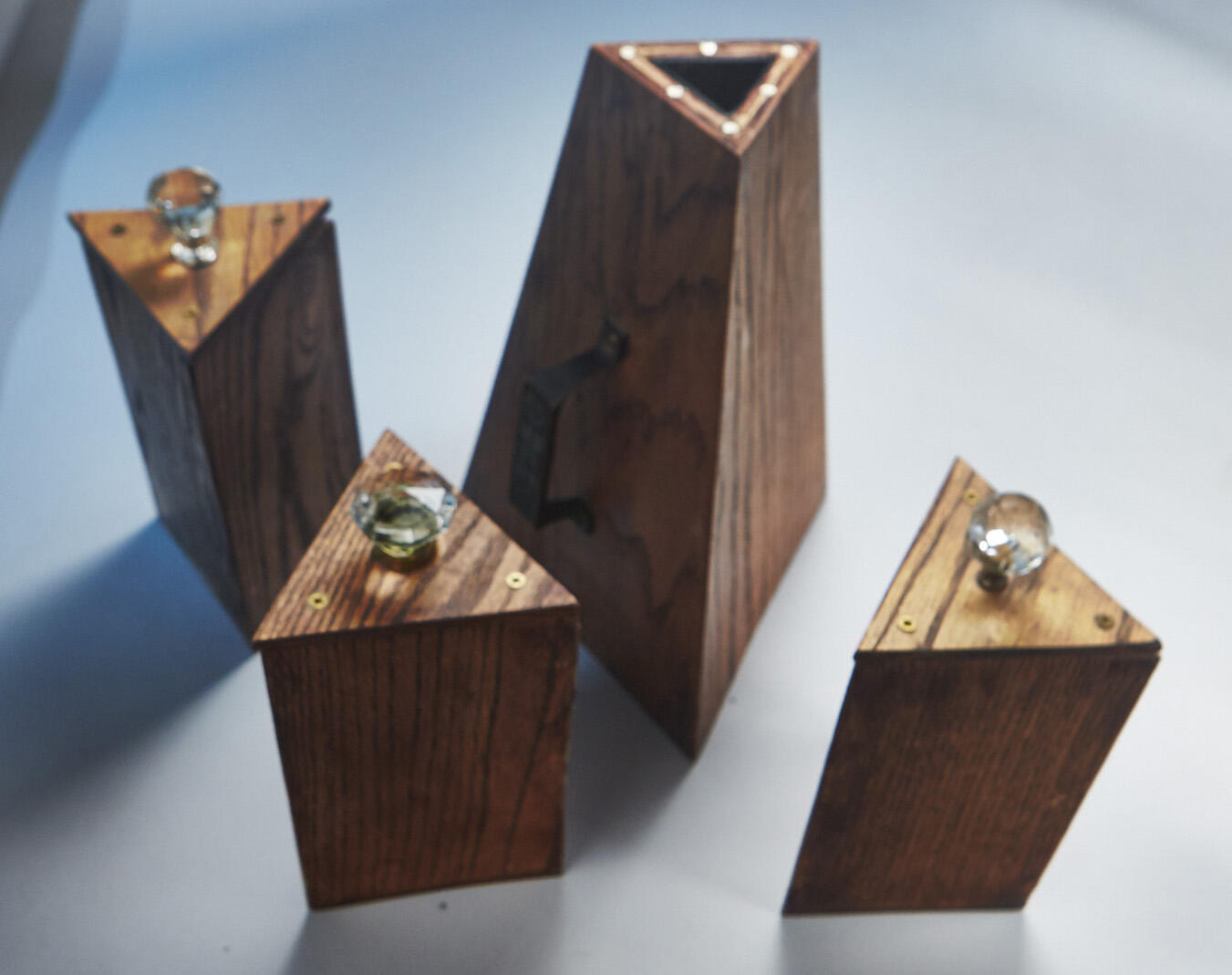
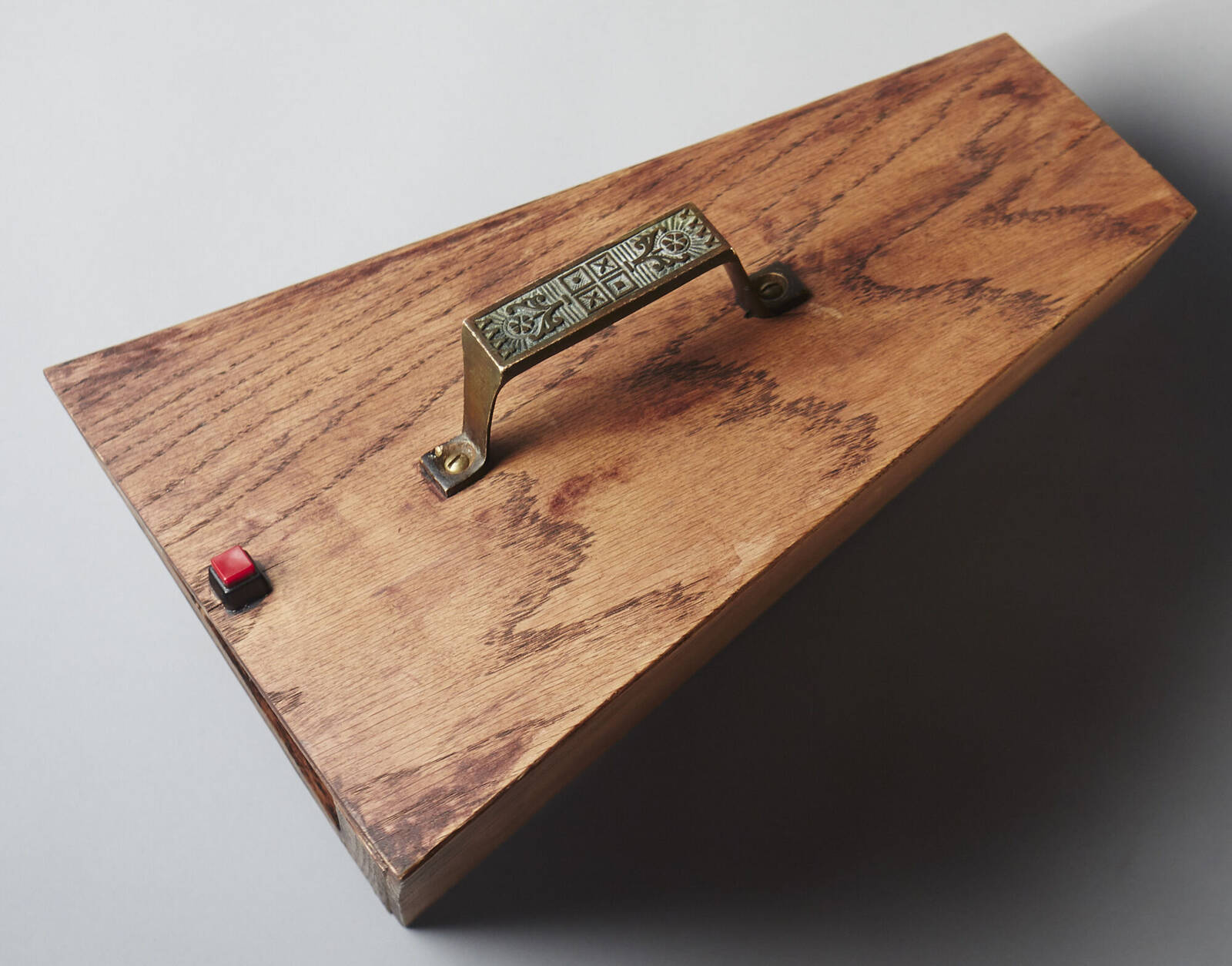
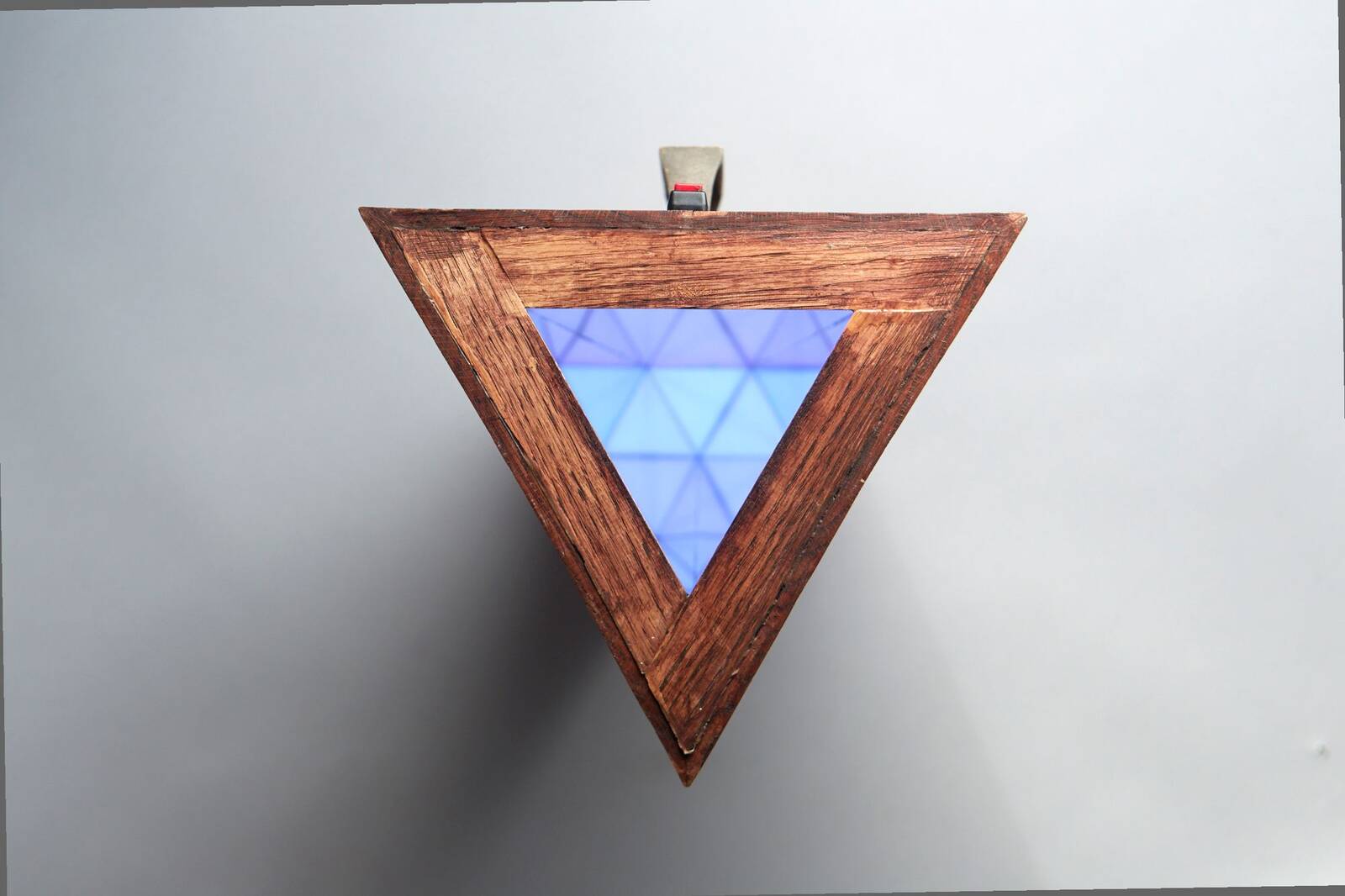
Family of scopes — three sizes
Views Through the Scope
Mall of America Kaleidoscopes (2023)
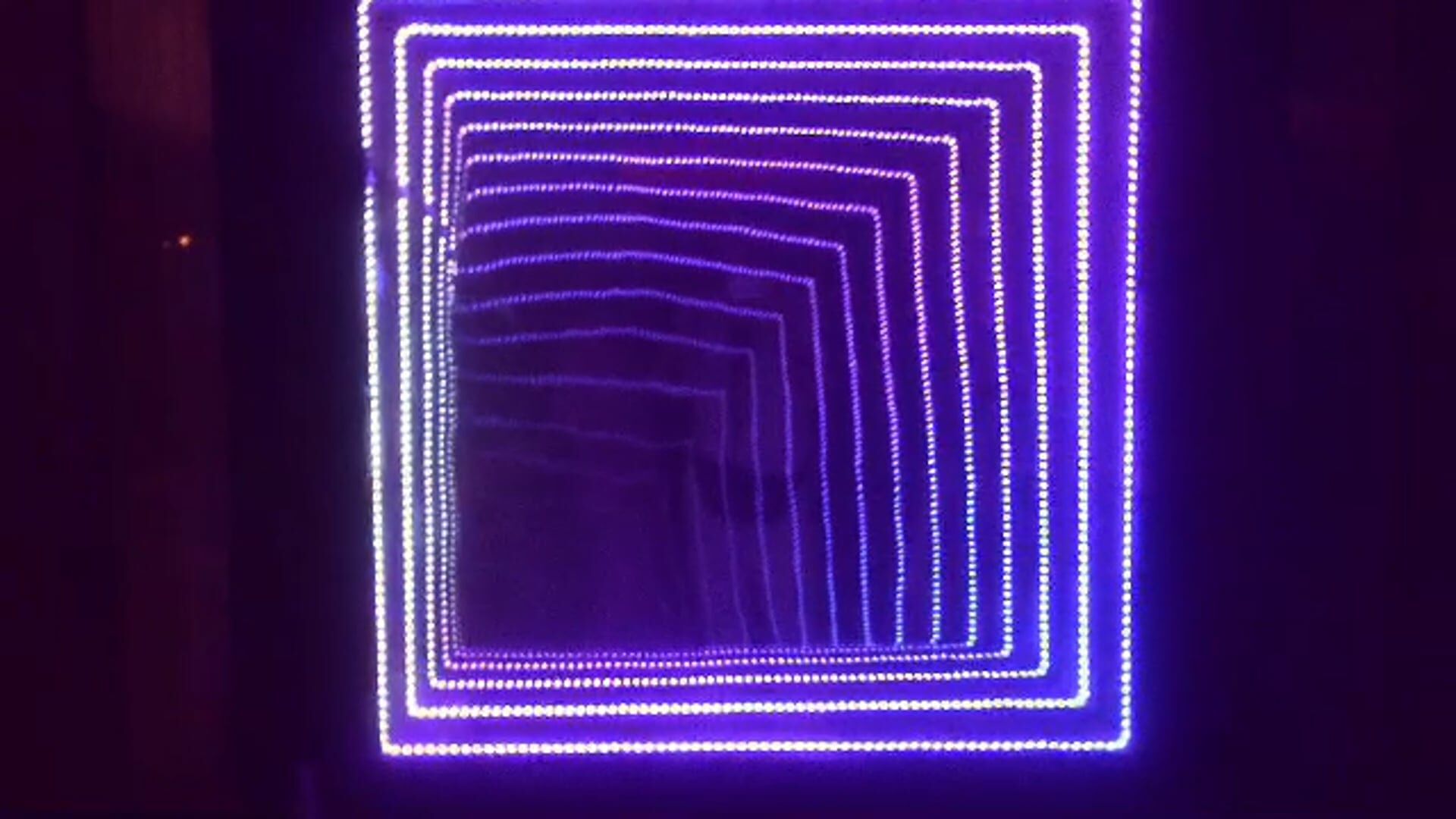
Four large-scale kaleidoscopes — two each of two novel designs — commissioned for an art installation at the Mall of America in Minneapolis. Instead of traditional one-way mirror surfaces, these use two-way mirrors for the interior walls. LEDs concealed behind the glass project programmable patterns that appear to float inside the kaleidoscopic reflections, synchronized to musical accompaniment throughout the exhibit.
Inside the Scope
Views
Pattern 1
Views
Pattern 4
Interested in this work?
Inquire